
Landscaping
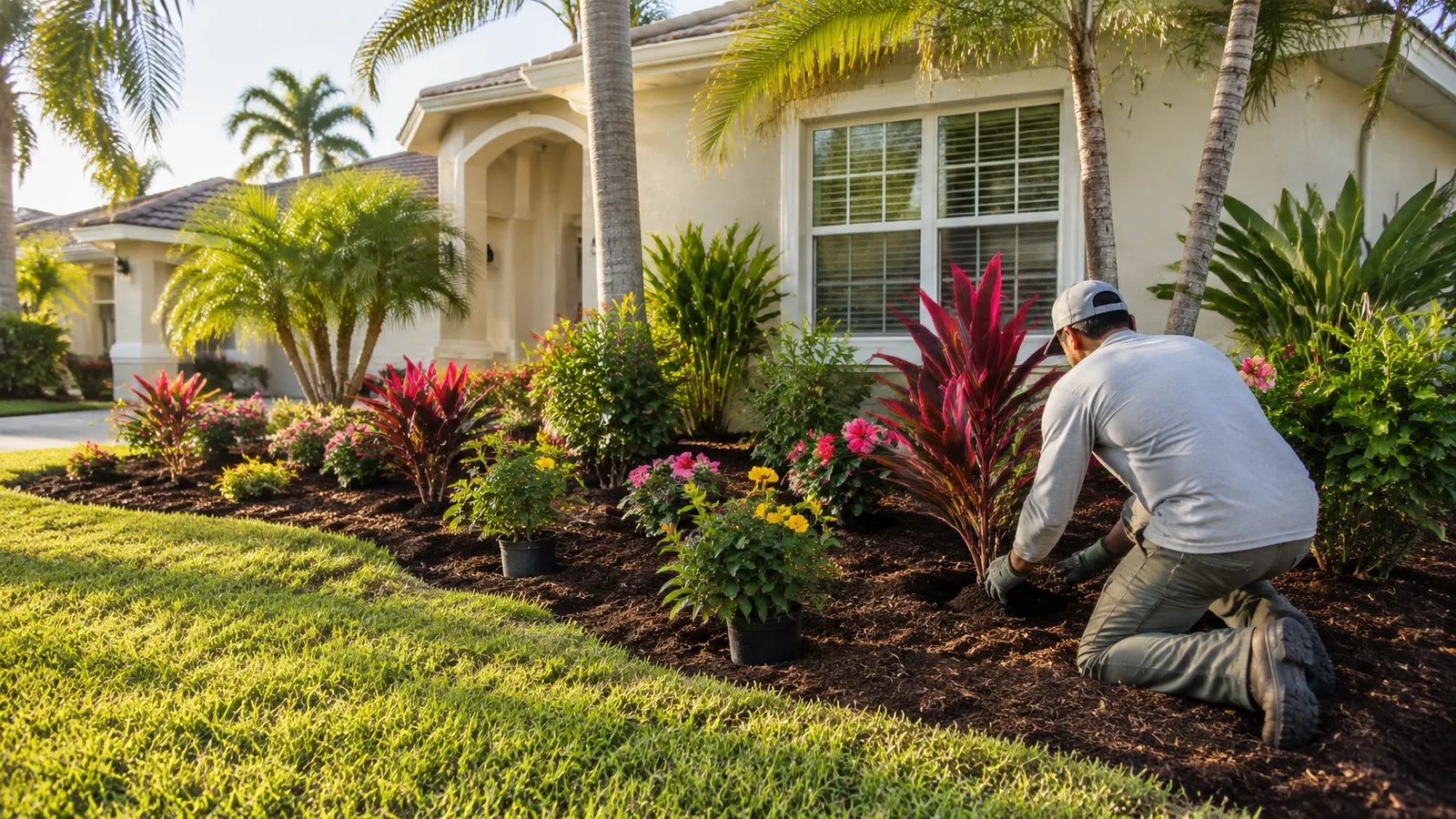
Most Villages homes came with a standard builder landscape package, and after some years the shrubs get leggy, the mulch thins and some plants just don’t make it through the summer. A local landscaper can freshen a single bed or redo the front and back yard with plants that handle Florida heat and sandy soil.
Work to discuss
- Bed redesigns. Pulling out tired shrubs and replacing them with Florida-friendly plants that need less water and trimming.
- Rock and mulch. Converting beds to decorative rock, or topping up pine bark, cypress or pine straw, with clean edges.
- Sod. Replacing dead or weedy patches, or a whole lawn, with properly prepared sod.
- Curbing and edging. Concrete curbing around beds and trees so mulch and rock stay put and mowing is easier.
- Trimming. Shaping hedges such as podocarpus and viburnum, and trimming palms and small trees.
- Irrigation. Sprinkler repairs, moving heads after a bed change, drip lines for beds and smart timers set to the local watering days.
- Drainage. French drains and regrading where water pools near the house or lanai.
- Lighting and extras. Landscape lighting, small water features, and paver borders or golf cart pads as part of a bigger project.
What’s different about Villages yards
Every village has deed restrictions and an architectural review (ARC) process for exterior changes, and many landscape changes beyond like-for-like replanting need approval first. Many local landscapers know the plant and material rules and can help prepare the paperwork. Sandy soil drains fast and holds few nutrients, so soil prep and the right plant choice matter more than they do up north. Some plants don’t make it through a Central Florida cold snap. A landscaper can pull the losses and replace them with hardier, more cold-resistant plants. Watering days are set by address, and timers should follow them.
Signs it’s time for a refresh
- Shrubs that cover windows or have bare, woody centers
- Bare patches where plants died in the summer heat or a winter cold snap
- Mulch that has thinned out or washed onto the walk
- Weeds coming up through rock
- Wet spots or pooling after afternoon storms
- Sprinklers spraying the house, the driveway or nothing at all
What affects the price
The size of the area, how much has to be removed and hauled away, plant sizes (smaller plants cost less and fill in over time), rock versus mulch, curbing length and any irrigation changes. Doing the work in phases can spread out the cost.
Before you speak with a professional
Take photos of the area from a few angles, note how much sun it gets, and mark any plants you want to keep. Find your irrigation timer and zone map if you have one, and check what your village’s ARC requires.
Good questions to ask
- Which plants do you suggest for this spot’s sun and soil, and how big will they get?
- Will you submit the ARC application, or should I?
- Is removal and haul-away of old plants and rock included?
- Will you adjust the sprinklers for the new beds?
- Do new plants come with any replacement period if they don’t take?
How the referral works
Snap a photo of the yard and send a short description through the Instant Photo Estimate. You’ll see a rough price range, usually on the next screen. It’s a free estimate to help you plan, not a quote. We’ll introduce highly rated local landscapers, free for residents. Each landscaper sets the final price and contracts with you directly.
Optional photos
Photos are optional, but they help. Take them from a safe place, and avoid faces, documents and access codes.