
Flooring Installation
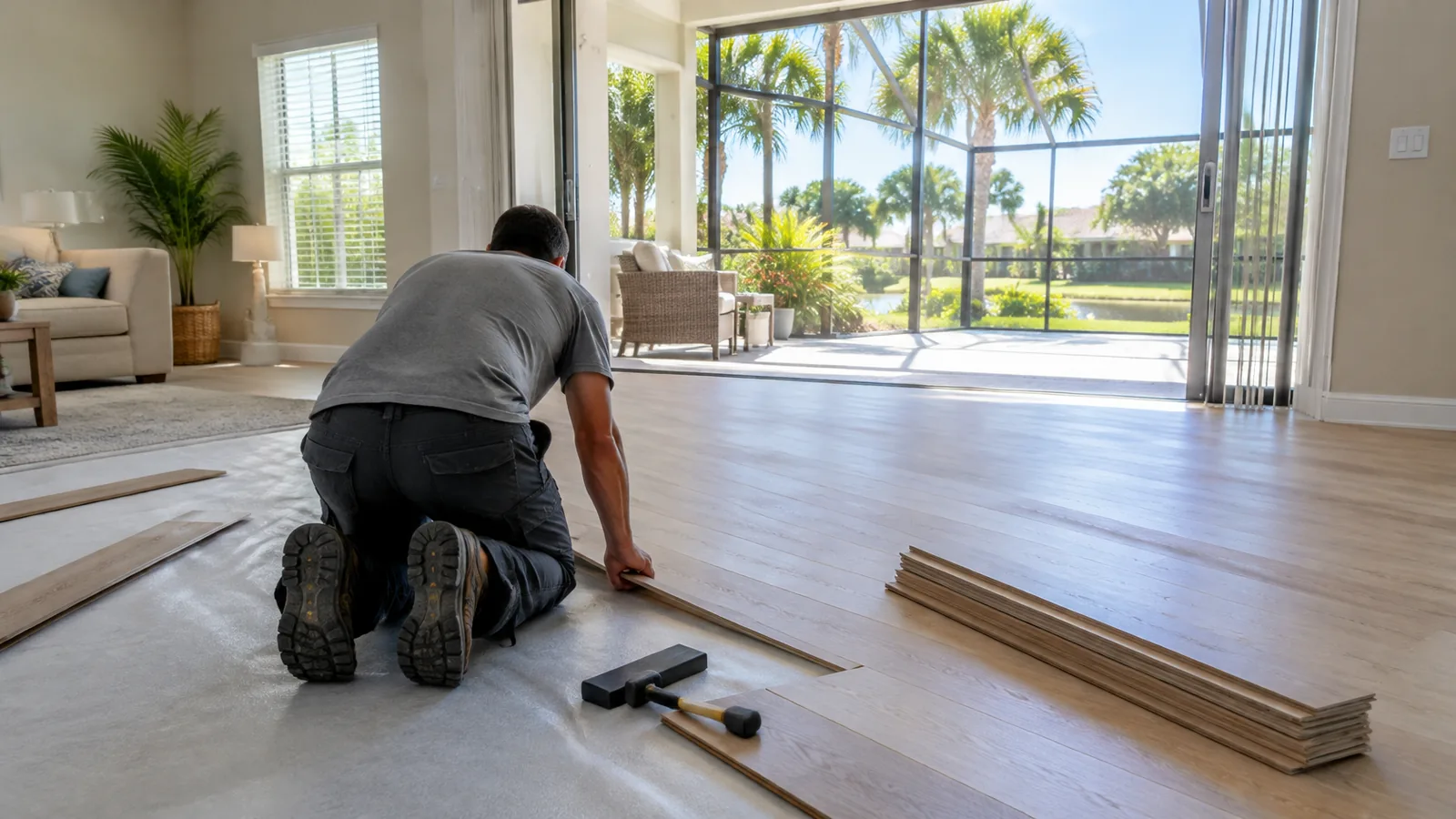
New floors change how a home feels more than almost any other project. In The Villages, the usual job is pulling up older carpet or tile and putting in luxury vinyl plank or large-format tile over the concrete slab. A local flooring installer handles removal, prep and the install.
Work to discuss
- Luxury vinyl plank (LVP). The most popular choice here: waterproof, comfortable underfoot, quieter than tile and easy to clean.
- Tile. Porcelain and ceramic tile, including wood-look plank tile, for kitchens, baths, lanais and whole homes.
- Carpet. Bedrooms and dens, with new pad.
- Laminate and engineered wood. Wood looks with good moisture resistance when installed correctly over a slab.
- Removal. Taking up old carpet, tile or vinyl and hauling it away. Tile removal over a slab is dusty, loud work, so ask how dust is controlled.
- Floor prep. Grinding high spots and leveling low spots so planks lock and tile sits flat.
- Trim and transitions. Baseboards, quarter round, thresholds and transitions between rooms.
- Repairs. Replacing cracked tiles, regrouting and fixing lifted planks.
What’s different about Villages homes
Almost every Villages home sits on a concrete slab, so the slab’s flatness and moisture decide what goes down and how. Many homes have the original builder tile or carpet, and owners often switch to one continuous floor for a cleaner look and fewer trip edges between rooms. Lanai floors face heat, sun and rain, so they need outdoor-rated tile or a coating. Furniture moving is a real part of the job in a fully furnished home.
Signs it’s time for new floors
- Cracked or hollow-sounding tiles
- Grout that’s stained or crumbling
- Worn carpet paths, stains or odors
- Planks that separate, lift or click
- Uneven heights between rooms that you trip over
What affects the price
Square footage, the material and product line, whether old flooring has to be removed (tile costs more to remove than carpet), how much leveling the slab needs, the layout (lots of rooms and closets mean more cuts), stairs, trim, and moving furniture and appliances.
Before you speak with a professional
List the rooms and an approximate square footage, the floor you have now and the material you like. Take photos of each room and any damaged spots. Note heavy furniture, a piano or a china cabinet that needs care.
Good questions to ask
- Does the price include removal, haul-away, leveling, trim and moving furniture?
- How do you control dust during tile removal?
- Which LVP or tile do you suggest for my rooms and why?
- How long will the house be out of use?
- What warranty covers the product, and what covers the installation?
How the referral works
Snap a photo of the room and send a short description through the Instant Photo Estimate. You’ll see a rough price range, usually on the next screen. It’s a free estimate to help you plan, not a quote. We’ll introduce highly rated local flooring installers, free for residents. Each installer sets the final price and works with you directly.
Optional photos
Photos are optional, but they help. Take them from a safe place, and avoid faces, documents and access codes.