
Golf Cart Repair
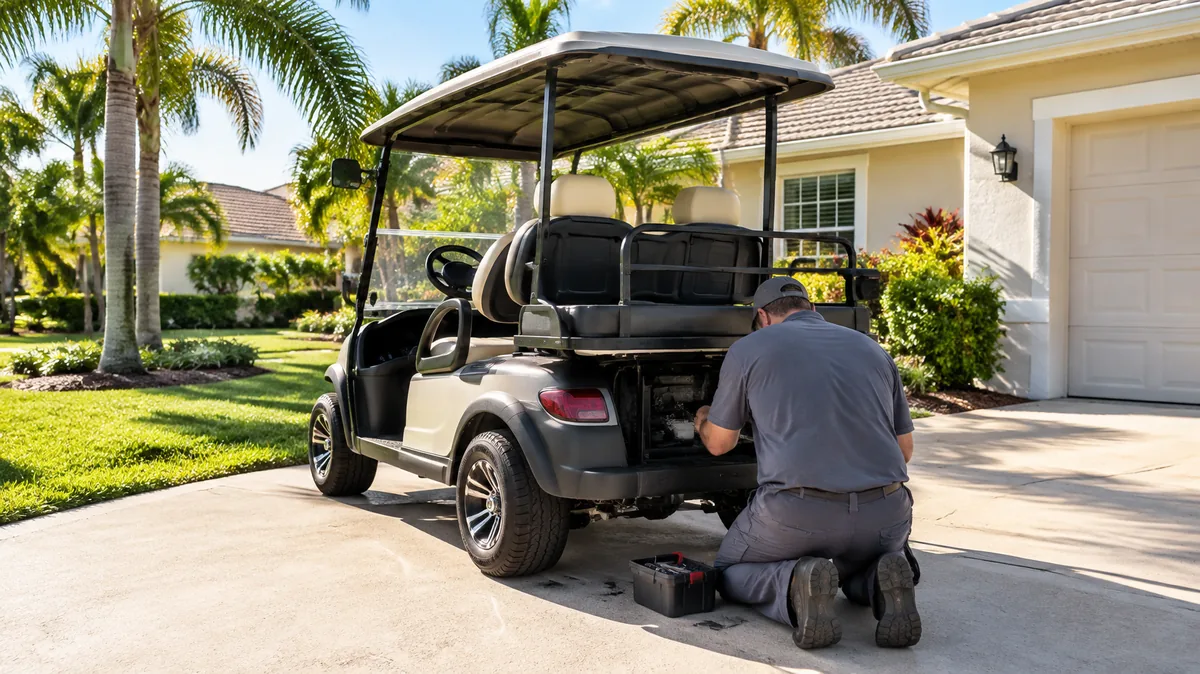
In The Villages, the golf cart is how you get to the golf course, the town squares and your friends’ houses, so a cart that won’t go is a real problem. A golf cart technician can fix it, keep it maintained and upgrade it, and many offer mobile service in your driveway or garage.
Work to discuss
- Batteries. Testing, watering and replacing lead-acid battery packs in 36-volt and 48-volt carts, including haul-away of old batteries.
- Lithium conversions. Replacing lead-acid packs with a single lithium battery: lighter, longer range and nothing to water.
- Chargers. Fixing or replacing chargers and charge ports that won’t charge or keep tripping.
- Brakes. Adjusting and replacing brake shoes and cables, especially on carts that sat all summer.
- Tires and wheels. New tires, rotation and alignment.
- Gas carts. Tune-ups, carburetor cleaning, belts and starting problems.
- Electrical and drive parts. Motors, controllers, solenoids, switches and wiring.
- Lights and accessories. Headlights, turn signals, mirrors, horns, seat belts, enclosures, seats and upgrades for street-legal use.
What’s different about carts here
Carts here are driven almost every day, on multi-modal paths and golf cart streets. Florida humidity corrodes battery terminals and charge ports, and brakes can seize on carts that sit all summer while their owners are away. Carts built or modified to go up to 25 mph count as low-speed vehicles and need the right lights and equipment. Mobile service is common, which saves getting a broken cart to a shop.
Signs it’s worth a call
- Less range, or the cart slows going uphill
- The charger won’t start, shuts off or keeps tripping
- Corrosion on battery terminals, or a battery smell
- Soft, grabbing or squealing brakes
- A gas cart that cranks but won’t start
- Clicking, jerking or no movement when you press the pedal
- Worn or uneven tires
If the brakes feel wrong, park the cart until it’s checked.
What affects the price
Make, model and year, gas or electric, battery voltage and type, lead-acid versus lithium, parts availability, and whether the work is done in your driveway or at the shop.
Before you speak with a professional
Note the make (Club Car, E-Z-GO, Yamaha, ICON and others), model, year, gas or electric, and battery type. Take a photo of the batteries and the serial number plate. Describe what the cart does and when it started.
Good questions to ask
- Can you do the work at my home?
- Is there a trip charge for mobile service?
- Lead-acid or lithium: which makes more sense for how I use the cart?
- Are old batteries hauled away and recycled?
- What warranty comes with the batteries and the labor?
How the referral works
Snap a photo of the cart and send a short description through the Instant Photo Estimate. You’ll see a rough price range, usually on the next screen. It’s a free estimate to help you plan, not a quote. We’ll introduce highly rated local golf cart technicians, free for residents. Each technician sets the final price and works with you directly.
Optional photos
Photos are optional, but they help. Take them from a safe place, and avoid faces, documents and access codes.