
AC and HVAC
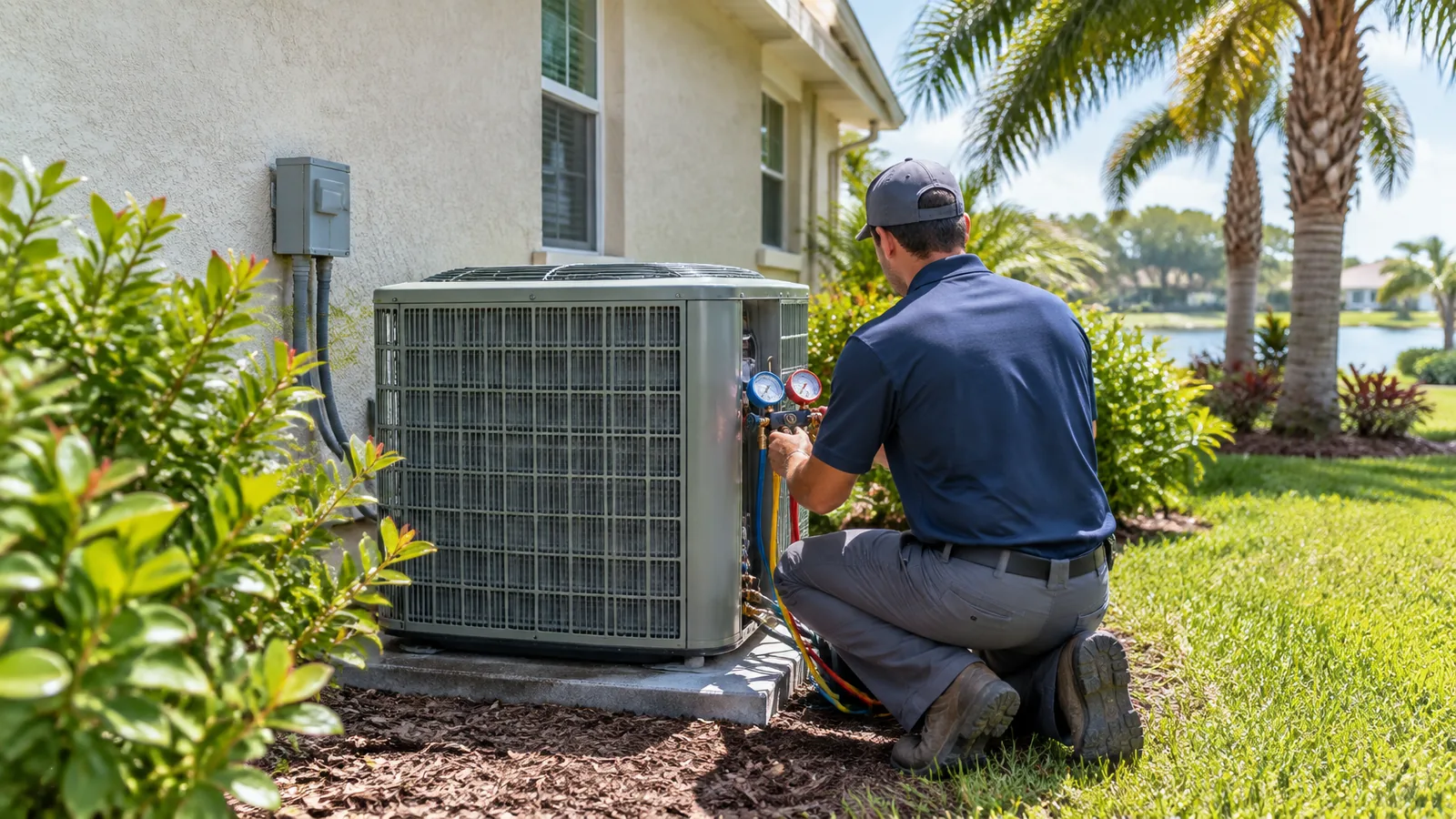
In Central Florida the AC runs for most of the year, and it does two jobs: cooling the house and pulling humidity out of the air. A local HVAC contractor takes jobs of every size: repairing the system you have, keeping it tuned up, replacing the whole system, or installing new equipment and ductwork for an addition.
Work to discuss
- AC repair. Capacitors, contactors, fan motors, refrigerant leaks, frozen coils and systems that won’t turn on.
- Tune-ups. Cleaning coils, checking refrigerant and electrical parts, and flushing the drain line, ideally every spring before the long cooling season.
- Drain lines. Clearing algae clogs in the condensate line and drain pan, and adding float switches so a clog shuts the system off before water reaches the ceiling or floor.
- New installs. Complete systems and ductwork for additions, enclosed lanais and new construction, with load calculations done for your home.
- System replacement. New split systems and heat pumps sized to the house, with a new thermostat and line set as needed.
- Thermostats. Programmable and smart thermostats, including ones you can adjust while you’re away.
- Ductwork. Repairing leaky or crushed ducts in the attic, sealing, and duct cleaning.
- Mini-splits. Ductless units for a golf cart garage, enclosed lanai, sunroom or addition.
- Indoor air quality. Better filters, UV lights and humidity control.
What’s different about Villages homes
Florida’s long, humid cooling season puts heavy wear on equipment, and many homes in a village were built at the same time, so systems often reach the end of their life around the same age. Drain lines clog with algae far more often here than up north. Part-time residents need the AC to keep running while they’re gone to hold humidity down and keep mold away, so a smart thermostat and a spring tune-up are popular. Outdoor units placed near the lanai or golf cart garage also need clear airflow.
Signs it’s worth a call
- Warm air from the vents, or the house won’t get below a certain temperature
- The system runs nonstop or turns on and off every few minutes
- Water in the drain pan, on the floor near the air handler or on a ceiling
- Ice on the copper line at the outdoor unit
- New buzzing, rattling or squealing
- A musty smell or higher humidity indoors
- A jump in the electric bill in summer
If you see water leaking or smell burning, turn the system off at the thermostat.
Repair or replace?
Age, how often it’s breaking and the cost of the repair all matter. In Florida, systems around 12 to 15 years old are often near the end of their life, and a big repair on an older unit is when many owners price a new system.
What affects the price
For repairs: the part, whether refrigerant is needed and access to the air handler. For replacement: the system size, efficiency rating, heat pump or electric heat, whether ductwork or the thermostat is replaced, and any upgrades like a new air handler stand or float switch.
Before you speak with a professional
Take a photo of the labels on the outdoor unit and indoor air handler (they show the brand, model and often the year), and of any code on the thermostat. Note what the system is doing and when it started.
Good questions to ask
- Is there a diagnostic or service-call fee, and is it applied to the repair?
- If you recommend replacement, can you show me the repair option too?
- How did you size the new system for my house?
- Does the price include a new thermostat, drain line work and permit?
- What do the equipment and labor warranties cover, and is there a maintenance plan?
How the referral works
Snap a photo of the equipment and send a short description through the Instant Photo Estimate. You’ll see a rough price range, usually on the next screen. It’s a free estimate to help you plan, not a quote. We’ll introduce highly rated local HVAC contractors, free for residents. Each contractor sets the final price and contracts with you directly.
Optional photos
Photos are optional, but they help. Take them from a safe place, and avoid faces, documents and access codes.