
Paver and Driveway
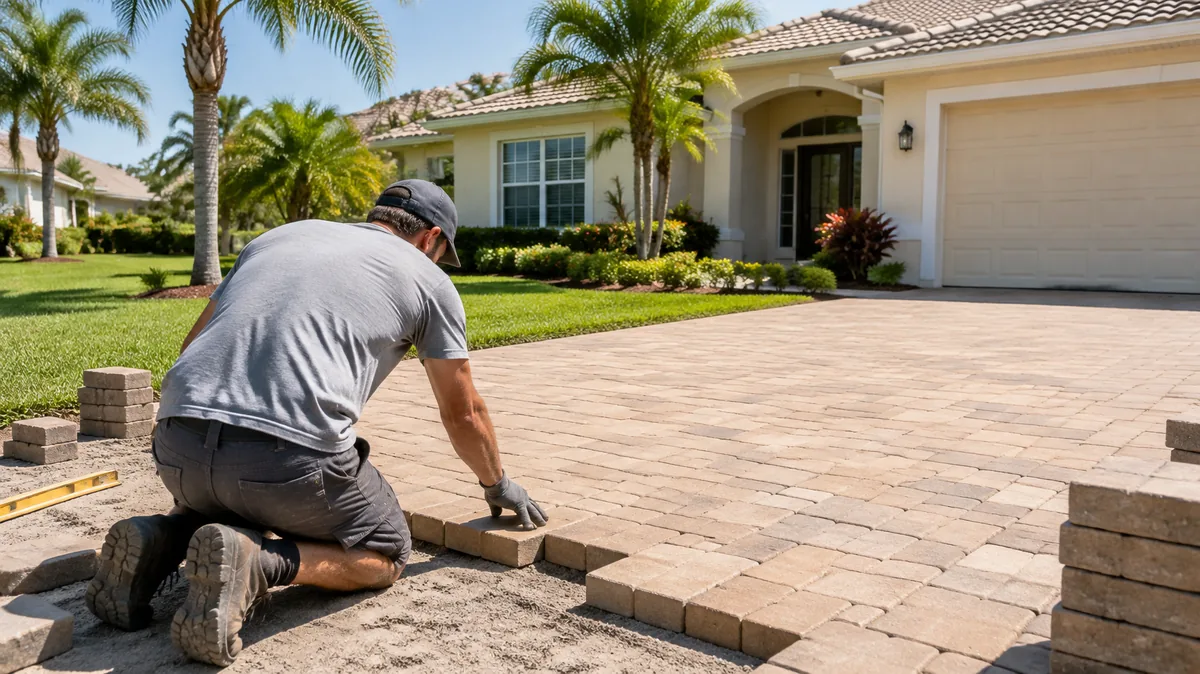
Pavers are one of the most common outdoor upgrades in The Villages: wider driveways, bigger lanai patios, pool decks and golf cart pads. A local paver installer takes jobs of every size, from a small walkway to a full driveway replacement or a whole-yard hardscape. Many also clean, seal and repair existing pavers.
Work to discuss
- Driveway extensions. Widening the driveway or adding a pad for a second car or golf cart, matched to the existing driveway.
- New paver driveways. Replacing a plain concrete driveway with pavers or covering it with a thin paver overlay.
- Patios and lanai extensions. Extending the lanai slab with pavers for seating, a grill or a fire pit.
- Pool decks. New paver or travertine pool decks, or refinishing around an existing pool.
- Walkways and entries. Front walks, side paths to the golf cart garage and entry landings.
- Golf cart pads. A level, solid spot to park or charge the cart.
- Cleaning, sanding and sealing. Pressure cleaning, new polymeric joint sand and sealer.
- Repairs. Lifting and re-leveling sunken pavers, fixing tree-root heaving and replacing cracked or stained pavers.
What’s different about Villages yards
Driveway and patio changes usually need ARC approval, and the rules vary by district. They often cover how far a driveway can be widened, whether it must match the original driveway’s color or pavers, and the size of golf cart pads. Sandy soil makes the compacted base the most important part of the job. Heavy summer rain washes out joint sand and can sink pavers where downspouts or sprinklers drain onto them.
Signs it’s time for work
- Pavers that have sunk, tilted or lifted
- Weeds and ants coming up through the joints
- Joint sand washed out after storms
- Faded, stained or algae-covered pavers
- A driveway that’s too narrow for the car and the cart
What affects the price
Square footage, paver type (concrete pavers, travertine or a thin overlay), removing old concrete, base work and grading, borders and pattern complexity, cuts around curves, and drainage fixes. Sealing and repairs are priced by area.
Before you speak with a professional
Take photos of the area and measure it roughly. Note how you’ll use it (car, golf cart, seating, pool deck), where water drains and whether the new pavers must match what you have. Check your district’s ARC rules before work starts.
Good questions to ask
- How deep is the base, and how is it compacted?
- Will you prepare and submit the ARC application?
- Can you match my existing pavers or driveway color?
- Is sealing included, and when should it be done again?
- What warranty do you give on settling?
How the referral works
Snap a photo of the area and send a short description through the Instant Photo Estimate. You’ll see a rough price range, usually on the next screen. It’s a free estimate to help you plan, not a quote. We’ll introduce highly rated local paver pros, free for residents. Each pro sets the final price and works with you directly.
Optional photos
Photos are optional, but they help. Take them from a safe place, and avoid faces, documents and access codes.